Optimize Energy Costs
Charge when conditions are favorable and discharge when energy is needed to optimize load profiles and operating costs.



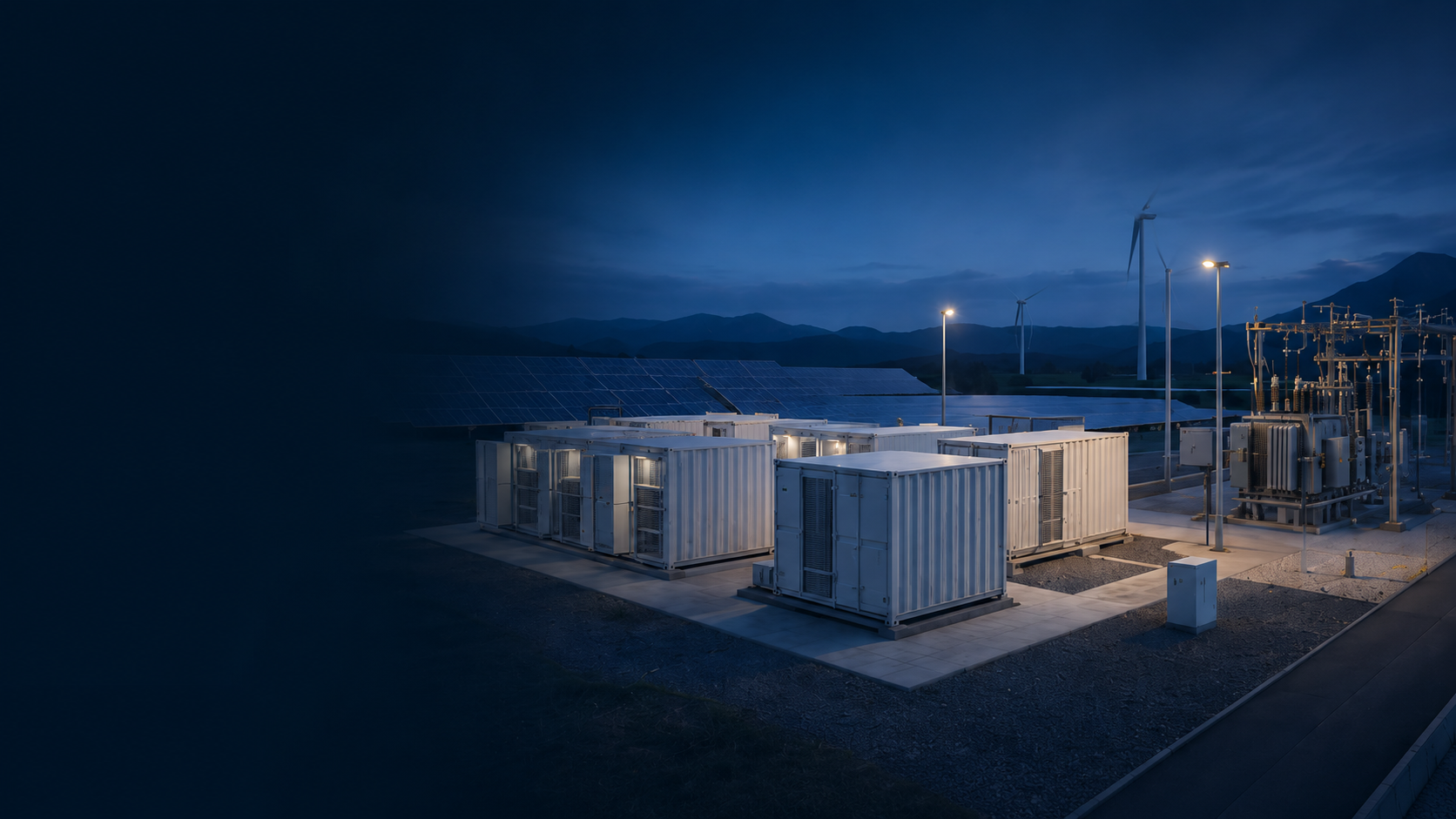
Storage decouples generation from consumption and grid conditions, enabling more efficient use of energy assets.
Charge when conditions are favorable and discharge when energy is needed to optimize load profiles and operating costs.
Limit maximum facility demand with battery support and manage demand spikes more effectively.
Provide backup power and continuity for critical loads during outages, voltage disturbances and temporary grid events.
Store surplus solar generation and use it when production is low or demand is high.
We structure solutions around three core applications and size each system for the site’s power, duration, mobility and operational requirements.
Battery systems designed for cost optimization and operational resilience in factories, commercial buildings, data centers and critical facilities.
Portable power solutions integrated into trailers or containers for disaster response, temporary worksites and outdoor events.
Compact, safe home battery systems compatible with rooftop solar in detached homes and villas.
We treat the battery as part of an integrated energy system spanning generation, consumption, power conversion and controls.
Store surplus daytime generation and use it when solar output falls or demand rises. The system is engineered using PV, inverter, battery and metering data.
The EMS monitors battery condition, temperature, cell balancing, generation, demand and market signals to optimize charging and discharging for each project.
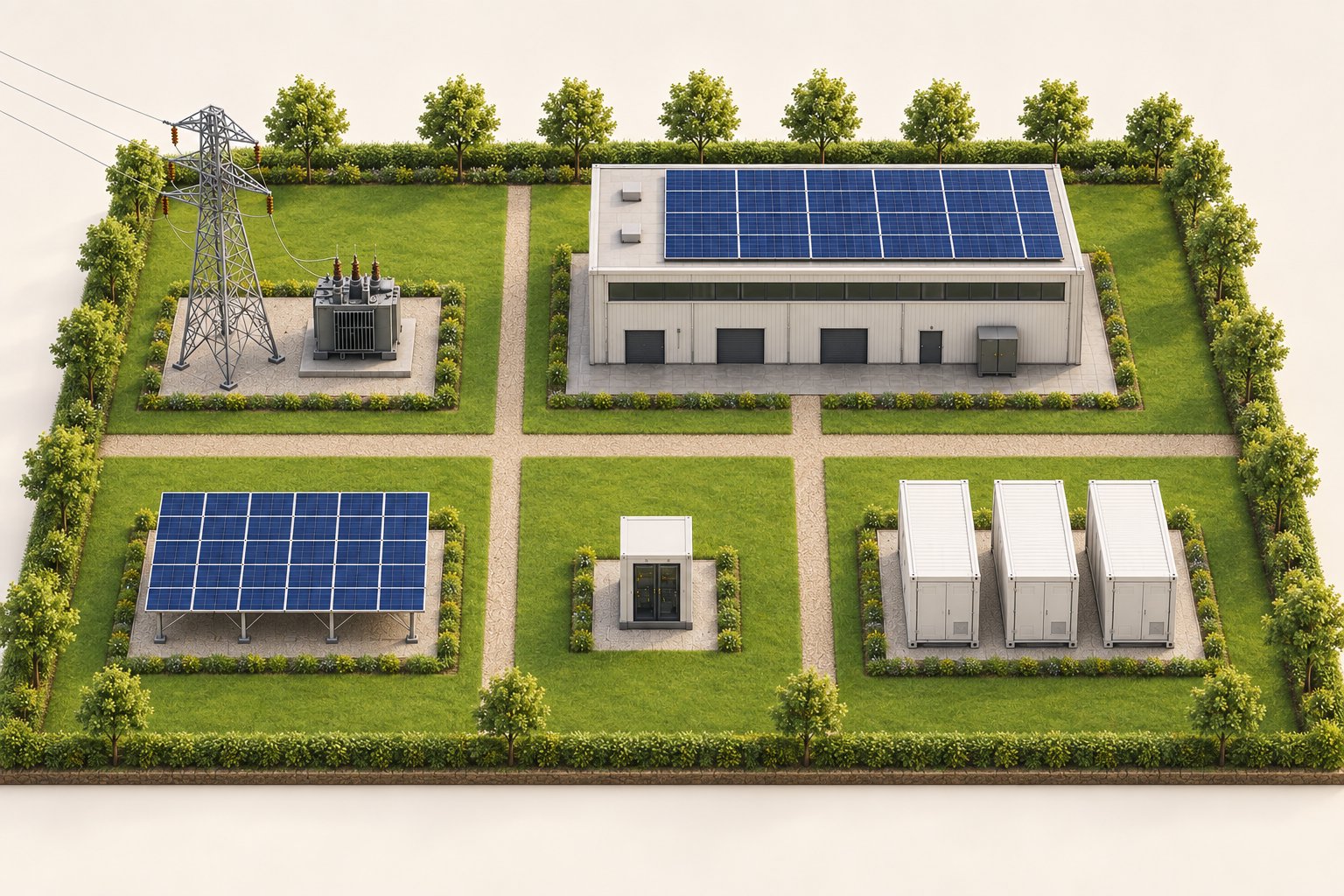 Şebeke
Endüstriyel tesis
Güneş üretimi
EMS
Enerji depolama
Instead of treating surplus output as a low-value export, our project-specific strategy stores it for hours when generation is lower or demand is higher.
Feasibility and economic value depend on the site’s generation and load profile, metering configuration, tariff structure, and applicable regulations.
Let’s analyze your generation, consumption and netting data together.
Request a Netting AnalysisWe manage the storage investment through one engineering approach—from needs analysis and commissioning to EMS operation and technical support.
We assess consumption, generation, peak demand, critical loads, tariffs and site conditions.
We model power, energy capacity, cycling strategy, degradation and payback impact.
Battery, PCS, BMS, EMS, protection and mechanical infrastructure are selected for the intended duty cycle.
Site works, electrical connections, communications, testing and commissioning are completed as one coordinated scope.
We monitor performance, manage charging and discharging strategies, and provide technical support.
System value depends on more than battery capacity. Design, safety, component compatibility and operating strategy must work together.
MW/kW power and MWh/kWh energy requirements are calculated from duration, peak constraints and the load profile.
BMS, electrical protection, thermal management, fire detection and site safety are engineered as one safety architecture.
Technical compatibility is verified across the battery, PCS, inverter, metering, protection and communications layers.
Charging and discharging decisions, alarms, energy flows and performance reports are managed centrally.
Keypower approaches storage as an integrated engineering, delivery and long-term operations program—not simply an equipment purchase.
One project team from analysis and commissioning through technical support.
Technical sizing, capital cost and operating strategy are evaluated together.
Key Holding’s industrial, investment and manufacturing experience strengthens our delivery approach.
EMS, monitoring, control and energy-optimization capabilities increase operational value.
Answers to key questions about commercial, mobile and residential storage.
Share your generation, consumption, peak demand and intended use case. Our team will help define the right storage approach.